
Do you need an international driving permit to drive a campervan? Not always. If you are visiting Western Australia with a current overseas driver’s licence, you can generally drive using that licence as long as it is valid and allows you to drive the type of vehicle you have hired. If your licence is not in English, you should also carry an accepted English translation or International Driving Permit (IDP) with your original licence.
That is good news if a campervan road trip is part of your Australian plans. For many international travellers, getting behind the wheel in WA is fairly straightforward once you have the right documents. This guide explains what you need before collecting your van, plus a few campervan-specific rules worth knowing before you point the bonnet towards the open road.
Quick Summary
- ✓Overseas visitors can use a current and valid overseas driver’s licence while visiting Western Australia.
- ✓If your licence is not in English, carry your original licence together with an accepted English translation or International Driving Permit.
- ✓An IDP works alongside your domestic licence. It does not replace it.
- ✓WA’s standard C-class licence covers vehicles with a Gross Vehicle Mass of no more than 4,500 kg and seating for no more than 12 adults, including the driver.
- ✓Everyone travelling in the campervan must be properly restrained while the vehicle is moving, and children may require an approved child restraint.
- ✓Home on the Road welcomes international travellers
Do You Need an International Driving Permit to Drive a Campervan in WA?
For most international visitors, the answer comes down to the licence you already have.
Transport WA states that visitors from overseas can drive in Western Australia using their current driver’s licence. While driving, you need to carry your licence, follow WA road rules, comply with any conditions attached to your licence and only drive vehicles your licence authorises you to drive. Your licence must also remain current and cannot be suspended, cancelled, disqualified or withdrawn.
A simple way to work out what to bring is:
| Your licence | What to carry in WA |
|---|---|
| Current overseas licence in English | Your original overseas licence |
| Current overseas licence not in English | Original licence plus an accepted English translation or IDP |
| IDP without your original licence | Do not rely on the IDP alone |
| Expired, suspended or cancelled licence | An IDP does not make the licence valid |
| Licence with vehicle restrictions | You must follow those restrictions in WA |
The WA Road Safety Commission advises overseas visitors to carry their current overseas licence together with a translation or International Driver’s Permit where required.
If you are unsure before leaving home, organise your paperwork before you travel rather than trying to sort it out after landing in Perth.
What Is an International Driving Permit?
An International Driving Permit is essentially a standardised translation of the information on your domestic driver’s licence. It can help police, rental companies and other authorities understand a licence issued in another language or format.
It is not a separate driver’s licence. You still need to carry your valid domestic licence with it. The Australian Automobile Association describes an IDP as a translation of a domestic licence rather than a stand-alone licence.
If you need an IDP for your trip to Australia, arrange it through the authorised issuing body in your home country before travelling.
What Is an English Translation?
If your overseas driver’s licence is not in English, an English translation provides the information on your licence in a form that can be understood by Australian authorities and your rental provider.
Unlike an International Driving Permit, which should generally be organised through the authorised issuing body in your home country before you travel, you can arrange a licence translation after arriving in Australia.
One of the easiest options is to use a NAATI-certified translator. NAATI is Australia’s national standards and certifying authority for translators and interpreters, and you can search the NAATI online directory for a certified translator who works with your language.
WA law requires drivers relying on a foreign licence that is not in English to carry an English translation verified by an approved person or body alongside the original licence. You can read the requirement in the Road Traffic Act 1974.
Transport WA also provides information about approved translations of overseas driver’s licences.
Whichever option you use, keep both your original overseas licence and its English translation with you when driving.
Can You Drive a Campervan on a Normal Car Licence?
In many cases, yes.
In Western Australia, a C-class car licence authorises you to drive a vehicle with a Gross Vehicle Mass of no more than 4,500 kg that is built or equipped to seat no more than 12 adults, including the driver. Larger vehicles can require a light rigid or heavier vehicle licence.
This is one reason compact campervans can be so appealing for international road trips. You get a sleeping space, kitchen and room for your gear without necessarily stepping up into a large motorhome.
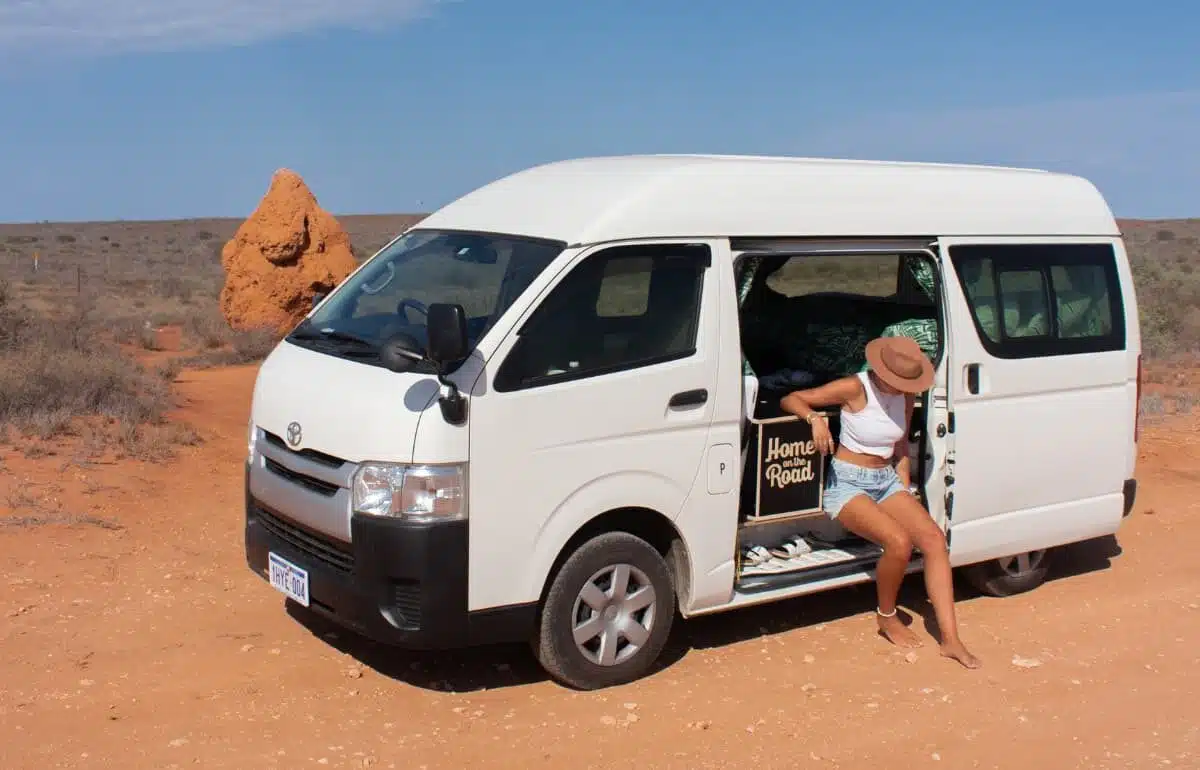
Home on the Road’s fleet uses automatic Toyota HiAce campervans, with options ranging from smaller 2 to 3-seater vans through to larger vans with additional legal passenger seating.
Your overseas licence still needs to authorise you to drive the equivalent vehicle class. If your licence contains restrictions, those conditions continue to matter while you are driving in WA.
Campervan-Specific Driving Rules to Know in Western Australia
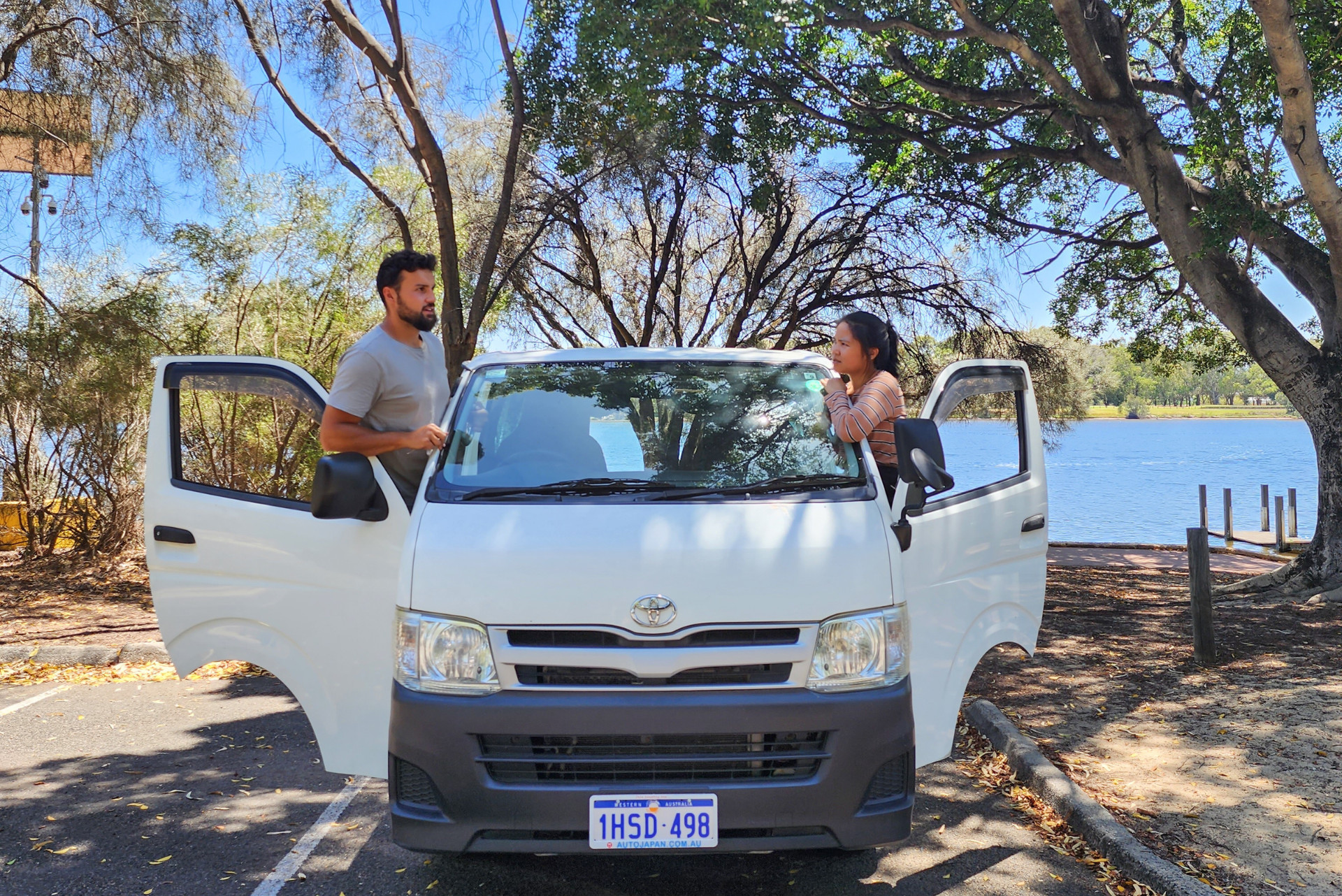
A campervan may feel like a little home on wheels once you pull into camp, but while it is moving, it is still a motor vehicle.
Everyone Must Travel in a Proper Seat
WA law requires drivers and passengers to wear seatbelts where they are fitted, and drivers are responsible for ensuring passengers are appropriately restrained.
For campervan travellers, the practical rule is simple: use the legal passenger seats while the van is moving. Do not treat the bed, camping area or other living space as an extra passenger seat.
For example, Home on the Road’s 2 to 3-seater campervan legally seats three people in the front, while its larger model includes additional legal seating in the rear.
Children Need the Correct Restraint
Children under seven must travel in an appropriate child car restraint in WA. The type of restraint and where your child can sit depends on their age. You can check the current requirements in the WA child restraint and seating guidelines.
If a vehicle has two or more rows of seats, children under four cannot travel in the front row. Children aged four to under seven can only sit in the front if the rear seats are already occupied by children under seven or are unsuitable for the required child restraint.
In a vehicle with only one row of seats, these front-row restrictions do not apply, but the correct child restraint is still required. Babies under six months must use a rear-facing restraint, while children aged six months to under four can use an approved rear-facing or forward-facing restraint. For safety, WA child health guidance recommends keeping children rear-facing until they outgrow the restraint and advises against placing a rear-facing restraint in the front seat, particularly where a passenger airbag is fitted.
If you are travelling with a baby, you will need to book Home On The Road’s 2-5 seater campervan. It has a rear row of passenger seats and child-seat anchor points available, giving you the appropriate setup for a rear-facing child restraint.
If you are travelling with young children, always confirm the child restraint requirements and suitable anchor points with Home On The Road before booking.
Your Licence Conditions Still Apply
If your overseas licence has restrictions, you need to follow them while driving in WA. That includes restrictions relating to the class of vehicle you can drive. Visitors must also follow WA provisional driver restrictions where applicable.

Home on the Road’s Toyota HiAce campervans are automatic, which can make things easier for travellers who are less comfortable with manual driving.
Rental Road Restrictions Are Separate From Road Laws
Being legally licensed to drive a road does not automatically mean your rental agreement allows you to take the campervan there.
Home On The Road campervans can travel on well-maintained gazetted unsealed roads for up to 10km at a time, giving you enough flexibility to reach many campsites, lookouts and regional stops without needing a 4WD.
WA has plenty of sealed roads linking its major towns, national parks and road trip destinations, but some final access roads can be unsealed. If your route includes one, check the distance and road conditions before setting off.
If you are unsure whether a particular road is suitable, ask Home On The Road before you travel.
What Should International Travellers Bring When Collecting a Campervan?
Before you arrive to collect your van, make sure you have your current full driver’s licence with you. If your licence is not in English, you should also carry the required IDP or approved English translation while driving in Western Australia, although Home On The Road will only ask to see your current licence at collection.
To hire a Home on the Road campervan, drivers must be at least 21 years old and must have held their full driver’s licence, not a provisional licence, for at least one year.
Getting your licence and any required translation sorted before your trip means there is less admin between you and the road ahead.
Ready to Explore Western Australia?
Once the licence question is sorted, the fun part starts.
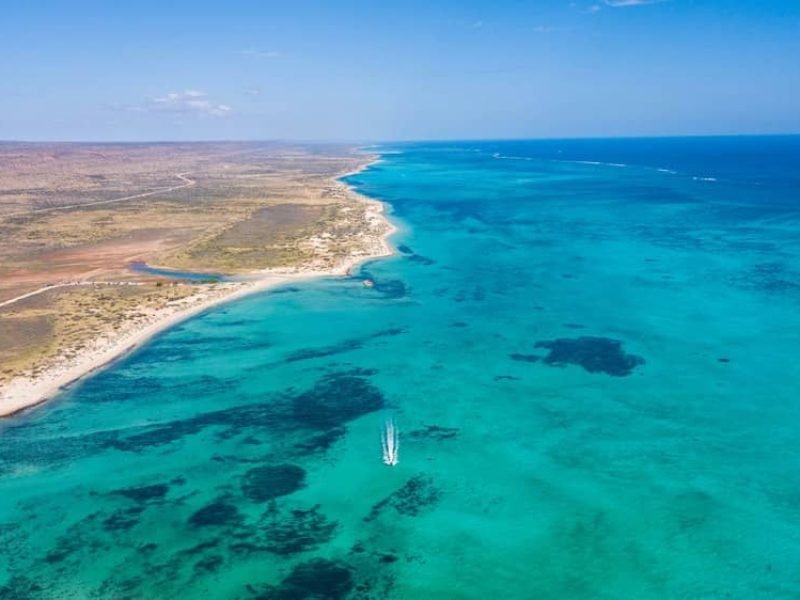
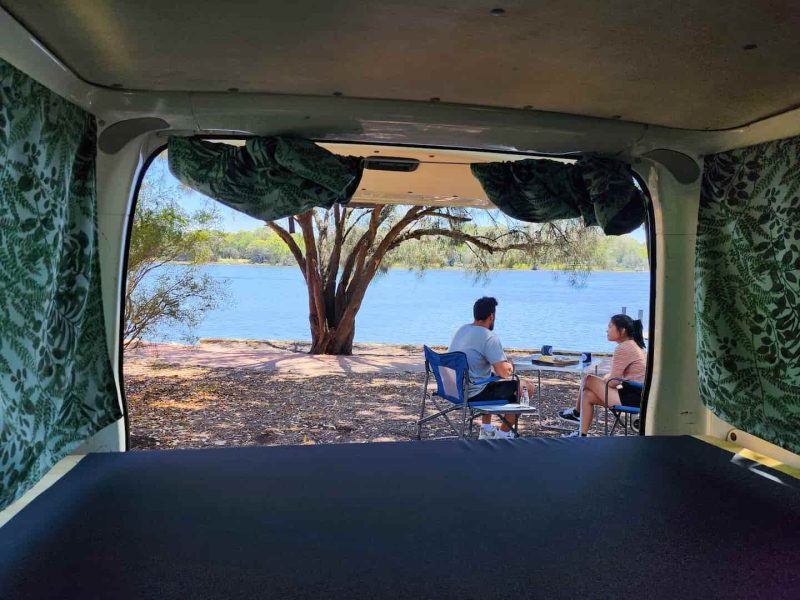
Western Australia is made for road trips. From the Coral Coast to the South West, a campervan gives you the freedom to explore WA at your own pace and spend more time in the places you enjoy most. A campervan gives you somewhere comfortable to sleep, space for your gear and the freedom to change plans when somewhere is too good to leave.
Our automatic Toyota HiAce campervan hire from Perth range is designed to keep road trips simple, with sleeping areas, slide-out kitchens, storage, roadside assistance and options for couples, families and groups.
If this is your first time driving here, our existing guide to driving in Western Australia for international tourists is a useful next read, covering local road rules and the practical side of travelling longer distances around WA. It is also part of Home on the Road’s wider campervan travel resource library.
Get your paperwork sorted, choose a route that suits your pace and leave yourself plenty of time for the stops you did not plan. That is usually where the best road-trip memories begin.
Explore our range of automatic Toyota HiAce campervans, secure your dates and get ready to explore Western Australia.